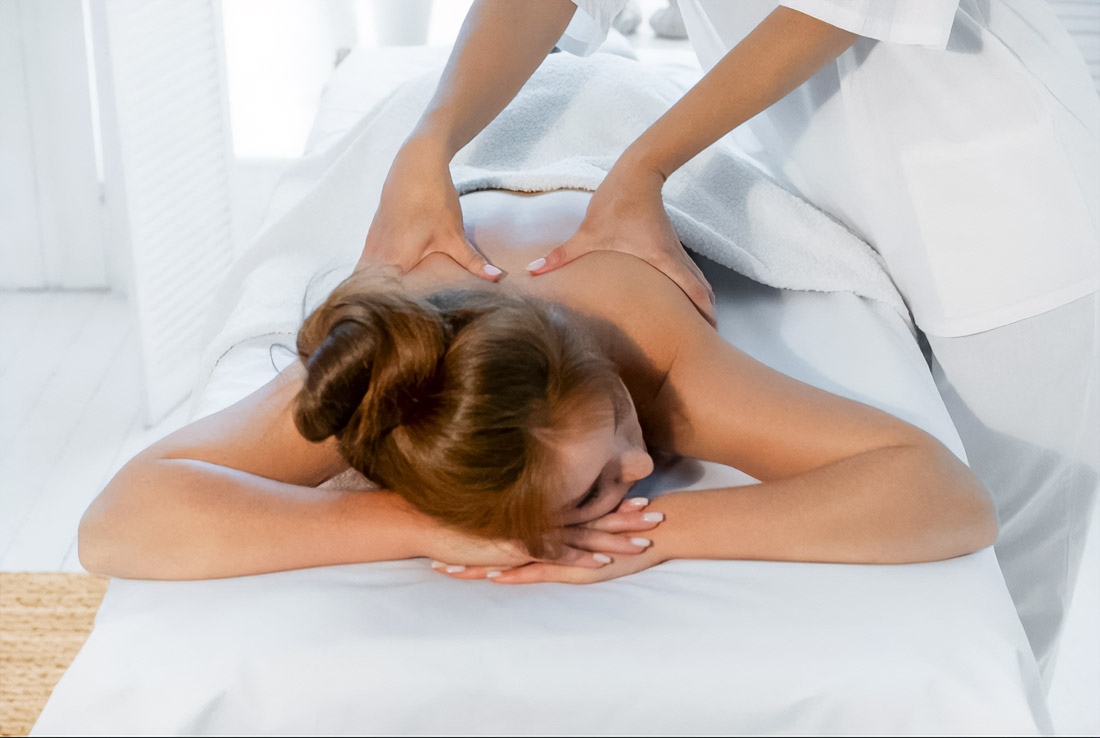
 Ashlyn Goodwin
- March 23, 2026
- 0 Comment
How Massage Helps Relieve Chronic Stress, Restore Focus, and Prevent Burnout
Constant stress rarely looks like a “disaster.” More often he comes quietly.: fatigue persists even after sleep, concentration breaks down into small pieces, and the focus of attention slips away at the most inopportune moment. The body is not silent at the same time. Tension in the neck, shoulders, and back accumulates day after day, turning into muscle cramps, headaches, and a feeling of inner stiffness. And now burnout is no longer a word from the articles it becomes a condition. Massage in such a situation does not work as a “pleasant pause”, but as a way to restore resources. It restores relaxation to the body and mental clarity to the mind. Not through magic, but through the understandable mechanisms of the nervous system, blood circulation, and response to the stress hormone cortisol.
Stress, Cortisol, And The Nervous System: Why The Mind Slows Down

Stress is not just about emotions. This is a physiological process involving hormones and the nervous system. When the load drags on, cortisol stays at a high level, and the body seems to remain in standby mode. In this state, it is difficult to restore energy. It is even more difficult to maintain clarity of thought.
The nervous system reacts in a straightforward manner. Muscles tighten, breathing becomes more shallow, and the body retains its “protection” even when there is no danger. Because of this, mental stress increases and anxiety increases. As a result, concentration suffers. Decisions are harder to come by. Attention jumps.
Massage helps to reduce the overall level of tension and maintains a state of deep relaxation. The text of the source explicitly mentions a decrease in cortisol after massage sessions as one of the reasons why people become calmer and easier to focus. When stress decreases, the mind begins to work cleaner, and emotional stability returns effortlessly.
Sedentary Work, Muscle Clamps And Blood Circulation: How The Body “Carries” Overload

Office workload often hits the same areas. Neck, shoulders, upper back, lower back. Sedentary work and poor posture gradually turn discomfort into a chronic history: tension becomes entrenched, stiffness appears, and flexibility decreases. Many people attribute this to “age” or an “uncomfortable chair.” But stress and repetitive loads also contribute.
Deep massage techniques (deep tissue massage) are aimed at removing muscle clamps and working out tight areas. Milder methods work through the nervous system and help the body get out of constant tone. In both cases, blood circulation improves. And this is important: a more active blood flow supports oxygen circulation and tissue nutrition. The source also describes the link between improved circulation, brain oxygenation, and increased mental clarity.
Sometimes the effect is felt unexpectedly. My back feels lighter. My head clears up. Energy appears, which was previously “eaten up” by constant muscle tension.
Sleep, Lymphatic System And Recovery: How Long Does It Take To Get Better
Sleep is a subtle indicator of burnout. Insomnia, shallow sleep, frequent awakenings, feeling tired in the morning all this fits into the picture of an overloaded nervous system. When a person does not recover at night, irritability increases faster during the day and productivity decreases. The source emphasizes that massage can improve sleep quality and reduce anxiety, helping the body to enter recovery mode.
There is another line. The lymphatic system. When she works sluggishly, there is a feeling of heaviness, puffiness, “cotton” fatigue and slowing down. Gentle techniques focused on lymphatic drainage have been described as a way to reduce swelling, reduce inflammation, and support immune function. It’s not about making big promises, but about balance and overall well-being.
There are specific time ranges in the source. Short recovery sessions can last 15-30 minutes; they are described as a convenient format between cases. More complete procedures are mentioned in the range of 60-120 minutes, when you need to work out the tension more deeply and give the body more time to relax.
The main thing here is regularity. Massage does not cancel the workload. But it changes the state in which you live this load. Restores balance, supports mental health and helps restore energy. And when it’s easier for the body, it’s easier for the mind to be clear.